
Two things changed for New Zealand merchants in the last eight months, and most comparison articles haven't caught up with either. Interchange fees on domestically-issued cards were capped from 1 December 2025, and regulated open banking went live on exactly the same day. If you picked a payment gateway before then — or you're comparing providers using an article written before then — your numbers are wrong.
Here's what the landscape actually looks like now.
The interchange change nobody told you about
Every card payment you accept is really three fees stacked together: interchange (paid to the cardholder's bank), scheme fees (Visa and Mastercard's cut), and your acquirer's margin. Your provider usually shows you one blended number, which is why the change was easy to miss.
The Commerce Commission capped the first of those three. From 1 December 2025, interchange on in-person transactions with New Zealand-issued credit cards fell from roughly 0.8% to 0.3%. Caps on foreign-issued cards followed on 1 May 2026. The Commission estimates the standard saves New Zealand businesses around $260 million a year, and in June 2026 it proposed a further round of caps worth an estimated $40 million more.
Two practical consequences:
- If you haven't renegotiated since November 2025, you're probably overpaying. A cap on interchange doesn't automatically pass through to you — it lowers your provider's input cost. Whether you see it depends on how your contract is structured.
- Blended pricing now hides more than it used to. Under a blended rate you pay one percentage regardless of card type, so a drop in the underlying interchange is invisible. Under interchange-plus you see the components separately, and the saving shows up in your next statement.
If you're on a blended rate and processing meaningful volume, asking your provider to quote interchange-plus is the single highest-value phone call available to you right now.
What the major providers cost
Stripe
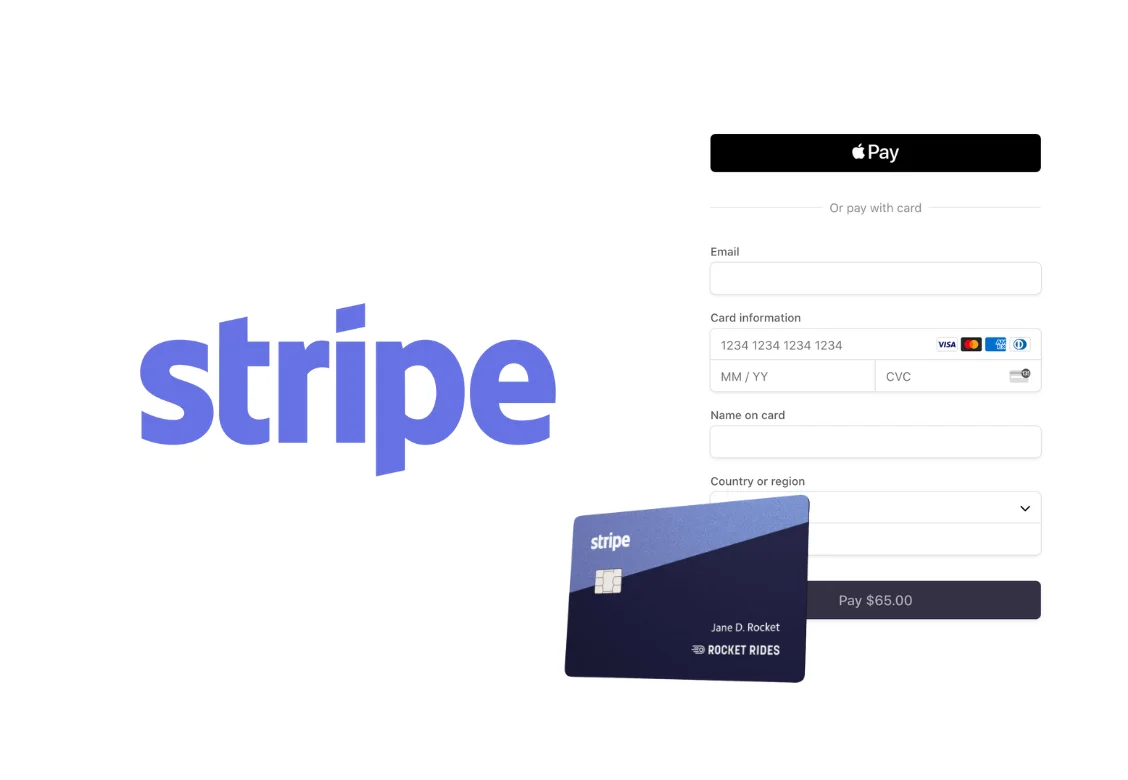
The only provider on this list that publishes its New Zealand rates openly, which is both its great virtue and the reason it looks expensive on paper:
- 2.65% + NZ$0.30 for domestic cards
- 3.5% + NZ$0.30 for international cards
- +2% where currency conversion is required
- NZ$25 per dispute, refunded if you win
That's rack rate, and it's genuinely high for a business doing real volume through New Zealand cards. What you're buying is the integration: Billing, Connect and Radar replace engineering work that would otherwise cost you months. For a SaaS business with subscriptions and dunning, that trade is usually worth it. For a retailer pushing NZ$3m of domestic card volume through a checkout, it usually isn't — and at that volume Stripe will negotiate.
Windcave
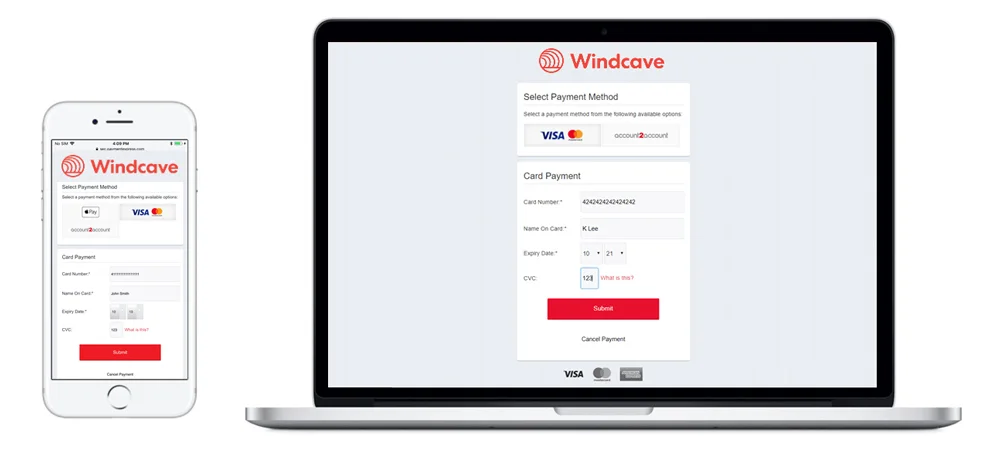
Windcave is Auckland-based, and the strongest local option when online and in-store need to reconcile in one place. Windcave doesn't publish rates — pricing is per-merchant and typically arrives as a monthly fee, a per-transaction fee, and a separate merchant service rate. Their blended billing model rolls interchange, scheme and acquirer fees into a single percentage.
The upside is genuine local acquiring and a support line where a human answers. The downside is that you can't comparison-shop from a website, and blended billing is exactly the structure that obscures the December interchange cut. Ask for the interchange-plus alternative before signing.
Worldline Online EFTPOS
The shopper approves the payment inside their own banking app, so no card number ever enters your checkout. That removes card fraud and chargeback exposure almost entirely, and the merchant economics are usually better than card rates because you're not paying interchange at all.
Supported by the big four banks plus The Co-operative Bank; Kiwibank has been the notable holdout. That coverage gap is the main thing to weigh — if a meaningful slice of your customers bank with Kiwibank, you still need a card option beside it. Best suited to an NZ-only customer base.
PayPal and Braintree
PayPal remains the fastest way to win trust from a buyer who has never heard of your store, and it's still worth having for export sales. Expect a higher effective rate, and remember that reconciliation happens from your PayPal balance rather than your bank account — which finance teams consistently underestimate.
Braintree is PayPal's gateway product: cards, PayPal and wallets through one integration, with better-than-average token portability if you ever migrate away. That portability matters more than it sounds. Stored cards and subscription tokens don't always move with you, and a provider that makes leaving hard has less reason to sharpen your rate.
Your bank's merchant facility plus a gateway
ANZ, ASB, BNZ and Westpac merchant accounts still deliver the sharpest per-transaction cost once you have volume, and they're the most direct beneficiaries of the interchange caps. The trade-off is setup friction and two vendors who point at each other when something breaks at 5pm on a Friday.
Buy-now-pay-later
Afterpay and friends aren't really payment providers — they're conversion tools that sit beside one. The merchant fee is a multiple of card rates, so the question is never "what does it cost" but "does the lift in conversion and average order value cover the cost". Model it before you assume it does.
Open banking is no longer a roadmap item
This is the part worth paying attention to. Regulated open banking went live in New Zealand on 1 December 2025, with nine third parties already running live propositions in partnership with the four largest banks. Kiwibank's payment initiation APIs were due by 30 May 2026, with account information APIs to follow by 30 November 2026.
Pay-by-bank has consequently stopped being a workaround. Services like Volley now offer merchant acceptance by link or QR code, with the customer confirming in their banking app, built on the regulated API standards rather than screen-scraping.
For most merchants this isn't a replacement for cards yet — it's a second rail that costs less and carries no chargeback risk, worth offering alongside. But any provider you're signing a multi-year contract with in 2026 should have a clear answer about their open banking roadmap. If they don't, that tells you something.
Fit decides more than rate does
A provider that's excellent for a SaaS subscription can be mediocre for marketplace splits or in-store terminals, and the gap costs more than any rate difference. Four questions sort a shortlist faster than a spreadsheet:
- Does it natively support your model — one-off, subscription, marketplace, invoicing, or a blend? Anything you have to build around is engineering you're paying for twice.
- How good is the integration path for your stack? A first-class SDK for your platform outweighs a marginally better percentage, every time.
- What does the local acquiring story look like? Processing New Zealand cards through an offshore acquirer costs more and declines more. On a high-volume checkout, a one-point difference in authorisation rate dwarfs 0.2% on the rate card.
- When something breaks at 5pm on a Friday, who answers — a human or a ticket queue?
Two more that rarely make the comparison and should: settlement timing, because T+1 versus T+3 changes your working capital position in a way the rate never shows; and the cost of switching later, because stored cards and subscription tokens don't always move with you. Ask about token portability before you sign, not when you want to leave.
The boring parts that dominate the integration
PCI scope, fraud tooling, 3-D Secure flows and reconciliation exports almost never make the comparison spreadsheet, and they routinely decide how long the build takes.
A provider that drops your PCI burden to a self-assessment questionnaire — through hosted payment pages or a drop-in element — pays for itself in avoided engineering and avoided audit. One that hands finance a clean settlement file saves an argument every month. One with usable fraud scoring out of the box saves you building rules you'll tune forever.
None of this is visible on a rate card, and all of it lands in the build estimate.
How to actually compare providers
Ignore headline rates and calculate your effective rate: total fees paid over a month divided by total processed volume. That single number is the only one that compares fairly across providers, and it's usually 0.4–0.8 percentage points above whatever the headline said.
To get there you need four things from every quote:
- Your real card mix. Pull last month's settlement file and count domestic debit, domestic credit, international, and Amex separately. Providers quote against the cheapest bucket; your mix decides what you actually pay.
- Whether the quote is blended or interchange-plus. After December 2025, this materially changes who captures the interchange saving.
- The per-transaction fixed fee. At a NZ$25 average order value, 30 cents is another 1.2% — often larger than the difference between the percentage rates you're agonising over.
- Failed payment, refund and chargeback fees. Subscription businesses feel these far harder than one-off checkouts, and they rarely appear in the comparison spreadsheet.
What we'd pick
We stay provider-neutral — we've shipped Stripe, Windcave, Braintree and direct bank integrations, and we recommend per project rather than per partnership. Broadly, though:
- SaaS or subscriptions — Stripe, almost always. The billing infrastructure is the product.
- NZ retail with online and counter sales — Windcave, for the single reconciliation story and local acquiring.
- NZ-only, high average order value — Worldline Online EFTPOS alongside cards, for the fraud and cost profile.
- High domestic volume, engineering resource available — a bank merchant facility plus a gateway, on interchange-plus.
If your shortlist has narrowed to the two obvious New Zealand candidates, Windcave vs Stripe is the head-to-head, with the pricing structures and local acquiring side by side. And if you'd rather someone just ran the numbers against your actual transaction profile rather than a hypothetical one, that's what our fintech team does — we've shipped all of the providers above, and we don't hold a partnership with any of them that would make the answer come out a particular way.





Rates cited are those published at the time of writing, July 2026. Payment pricing moves — confirm current figures with the provider before making a decision.